

What are we missing from 50s fashion


Much has changed in fashion shows since the fifties. With no Twitter, no crowds of people lining outside the doors, waiting for a glimpse of couture. Mainly the collections were showcased only to buyers, editors, and journalists. Models smiled, laughed, and interacted with the audience, who diligently took notes of the outfits. Fashion shows today, especially New York fashion week, have become more like a circus. Huge crowds, outrageous clothes, angry models in block heels. The main focus of this essay is to bring to attention the differences between then and now, and to evaluate what we are missing from the past.
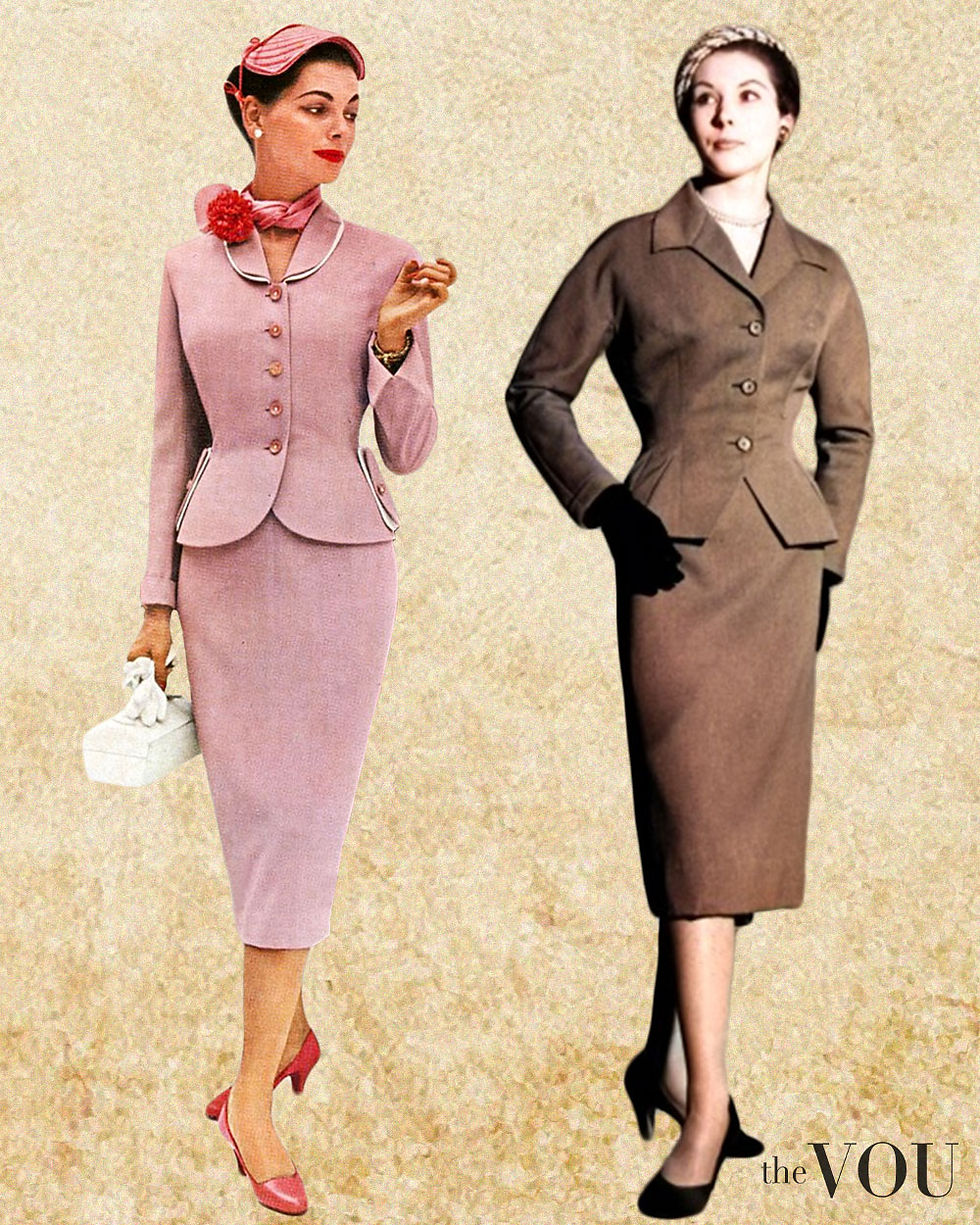
I have finally found out the difference between the shows in the fifties and now. The fifties are not an outdated time stuck somewhere in the past. The fifties were most known for “The New Look” by Christian Dior, “The Little Black Dress” by Chanel, no waist line by Christobal Balenciaga, and the hand-crafted jackets of Schiaparelli. We are in awe of the fifties.

Not everyone could be invited to fashion shows in the fifties, but when the invitation would arrive at the doorstep or mailbox, it was something to take very seriously. The guests were way more critical of designers back then, which made the fashion world more competitive. There were few designers, but well-known, such as Yves Saint Laurent, Gabrielle Chanel, Christian Dior, Christobal Balenciaga, Madame Vionett, Emilio Pucci, John Cavanagh, Schiaparelli, etc.

Not only did the fashion models act differently, but the attendees were another group altogether. No selfie spot or million-dollar aesthetic background. Just models in couture clothes, walking smiling 1 foot from the attendees.
Indeed, while in 2022 the front row is crowded with A to Z-list celebrities, influencers, teenage socialites, and other varieties of the rich and famous, seats were once primarily reserved for editors, buyers, and an elite selection of Hollywood stars and royalties.
One photo from July 1953 published in one of Vogue magazine editions, shows a group of women taking notes and analyzing every outfit from the collection. Models wore one outfit, showing a number on the side of the dress. Made it easier for the buyers to remember the outfits they liked and order sample sizes out of every garment.
In another image, featured in one of the fashion magazines from 1949, the ladies in the front row are from a more exclusive crowd, including movie star Norma Shearer and Princess De Rethy, wife of King Leopold of Belgium.
Gold ashtray stands are scattered near the front row for easy access for the attendees.
The Emilio Pucci show in April 1957 featured a simply raised catwalk, balloons occupying the wall, and ladies clad in sportswear carrying banderoles.
Unlike the over-the-top lighting and decor (the décor of Dior costs from $300.000 to $1.000.000) that often serves as the backdrop for modern shows, white shades and minimalistic chandeliers can be seen in the room where the show was held.

What's more, models themselves did their make-up, as Cindy Crawford states in one of the Vogue Magazine interviews, from 1953 at the John Cavanagh catwalk, to Gianni Versace in 1990. Everything, by all means, was handcrafted.
But the most jarring way fashion shows have changed over the years is the large crowds and never-ending parades to get in.
Oscar de la Renta recently lamented the state of Fashion Month, admitting that he would be cutting back the number of invitations to his show to just 350 people. Mr. de la Renta is undoubtedly referring to the increasing desire of actors and actresses, socialites, influencers, and It-girls who want to attend the events merely to be seen. And that is accurate because according to polls from New York streets no one is interested in knowing what’s new. The first thing they admit is to check for presents, not all can be like Dior or Chanel who lavish their guests with one-of-a-kind pouches or cards.
New York Fashion shows are packed, and there are more and more newly graduated fashion designers from Parsons. This makes it impossible to coordinate, merely impossible.

Despite the frustration caused by the hustle and bustle, it certainly is worth it. According to the New York City Economic Development Corporation, Fashion Week rakes in around $865 million, much more during Haute Couture week.
And for newly graduated designers, such as Jacquemus, who gathered money to start his collections just by standing behind closed doors begging for someone to give him a chance. Turns out, he is one of the most distinguished designers we have, the exposure is priceless.
Such is the scale of Fashion Month that should just one department store pick up her cutting-edge label, her brand could become the next Jacquemus.


Comments